Every government program has an unofficial operating manual. It just doesn’t exist anywhere you can find it.
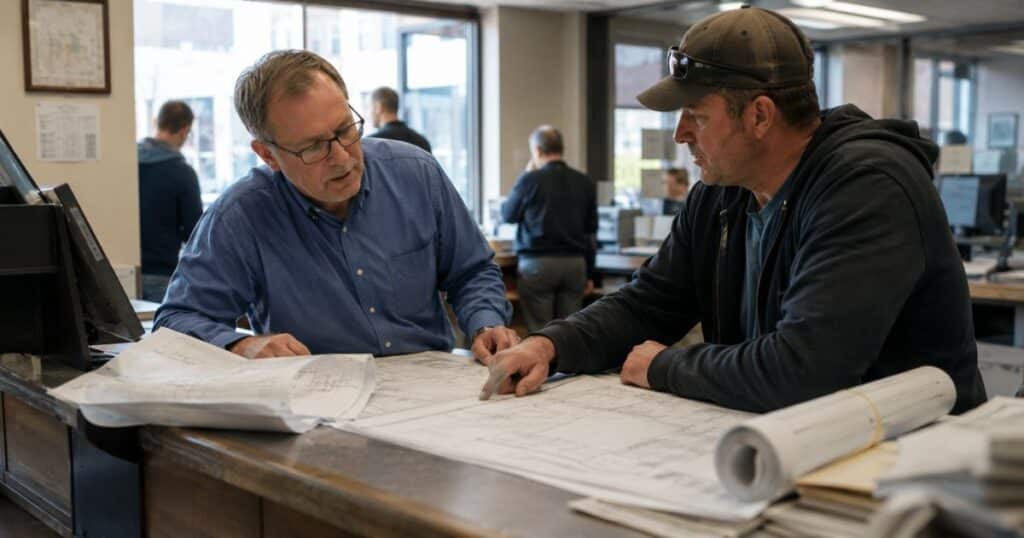
It lives in the inbox of the person who has handled exceptions for twelve years. It lives in the memory of the supervisor who knows which approvals need extra scrutiny and why. It lives in the habits of a team that has worked together long enough to move work through a program without ever stopping to explain how they do it.
That knowledge is load-bearing. Remove it and programs slow down, make errors, or quietly stop working the way anyone intended, often without anyone being able to say exactly when things changed.
According to a 2026 workforce survey published through ICMA by UKG, 46 percent of HR managers in the public sector anticipate the largest wave of retirements in the coming years, on top of 738,000 government job vacancies that already existed at the end of 2025. State and local programs that were already running lean are being asked to absorb more turnover, faster, with less time to prepare than anyone planned for.
Most agencies have responded with some version of a knowledge transfer plan. Shadowing periods, transition documents, exit interviews. These efforts are not worthless, but they rest on an assumption that rarely holds: that institutional knowledge is something you can extract from a person and hand off cleanly before they clean out their desk.
The knowledge that matters most does not transfer through documentation. It transfers through doing, repeatedly, until it becomes second nature to someone else. And if the doing has never been captured anywhere, there is genuinely nothing to hand off when someone walks out the door.
The good news is that you do not need a transformation project to start addressing this. Most programs can make meaningful progress with a few deliberate conversations and a clearer eye on where the risk actually lives.
1. Map the dependencies before they walk out the door.
Start by identifying the people in your program whose departure would create the most operational uncertainty. Not just the most senior people, but the ones everyone quietly routes things through. The person whose name comes up whenever something unusual lands. Then ask a simple question: if they were gone tomorrow, which specific parts of the program would slow down or break?
That conversation alone will surface more institutional knowledge risk than most agencies have ever formally acknowledged. It also tends to change how program leaders think about documentation, not as a bureaucratic obligation, but as something worth doing before you need it.
2. Follow a process end to end and write down what you actually see.
Not what the policy says should happen. What actually happens. Who touches the work, in what order, what decisions get made along the way, and where things slow down or get rerouted.
Most programs have never done this, and the exercise itself tends to reveal dependencies, redundancies, and informal workarounds that nobody realized were holding things together. It is uncomfortable in the way that most honest assessments are. It is also the only way to clearly see what you are actually working with before someone who carries that knowledge in their head is no longer there to fill in the gaps.
3. Find the exceptions and make them visible.
Every program has cases that do not fit the standard path. Those exceptions are almost always handled by the most experienced staff, and they almost never get documented. The decision gets made, the case moves forward, and the reasoning disappears.
Start capturing them. What triggered the exception, how it was handled, what the outcome was. Over time that record stops being a log and starts being part of how the program operates, a reference that new staff can learn from and that supervisors can use to make more consistent decisions. The goal is not to eliminate judgment. It is to make sure judgment does not have to start from scratch every time.
4. Ask your newest staff member what confused them most.
New employees absorb institutional knowledge through trial and error, and they remember exactly where the gaps were before they filled them in. The moments where they did not know who to ask, where the process was unclear, where they made a guess and hoped for the best.
Their experience is a reliable map of where your program’s operational knowledge is least visible. It is also one of the most underused sources of process insight in any organization. A thirty minute conversation with someone who joined in the last six months will tell you more about your documentation gaps than any internal audit.
The underlying shift.
These four steps are not a knowledge management strategy. They are a way of starting to move operational knowledge out of people’s heads and into something the organization actually owns, so that when staff turn over, and they will, the program does not turn over with them.
The agencies that handle transitions without crisis are not the ones with the best offboarding checklists. They are the ones where the process carries the memory, not the people running it at any given moment. New staff inherit a working program. Supervisors can see where work is sitting. When something goes wrong there is a trail to follow.
That is not a technology problem or a budget problem. It is a decision about where operational knowledge should live, and it is one that program directors can start making today.
The longer term answer is structural.
The four steps above will surface the risk and start moving knowledge out of people’s heads. But the honest truth is that as long as operational knowledge lives in documents, spreadsheets, and shared drives, it is still fragile. Documents go stale. Spreadsheets get orphaned. The next person who joins still has to go looking for context that should just be part of how the program runs.
The agencies that stop worrying about institutional knowledge walking out the door are not the ones with the best documentation habits. They are the ones where the process itself has become the system. Where approvals, exceptions, routing rules, and policy decisions are built into how work moves, not stored somewhere off to the side hoping someone finds them in time.
When operational knowledge lives inside a structured, visible process rather than in the people managing it, turnover stops being a knowledge transfer problem. New staff inherit a working program on day one. Supervisors can see exactly how work is moving. When policies change, there is a process to update rather than an institutional memory to reconstruct.
That is what technology built specifically for government program operations makes possible. Not just digitizing forms or automating individual steps, but giving program teams the ability to design, run, and improve how their programs actually operate, so the knowledge that keeps those programs running belongs to the organization, not to the individuals who happen to be there right now.
SimpliGov is the platform where government program teams design, run, and improve how their programs operate.