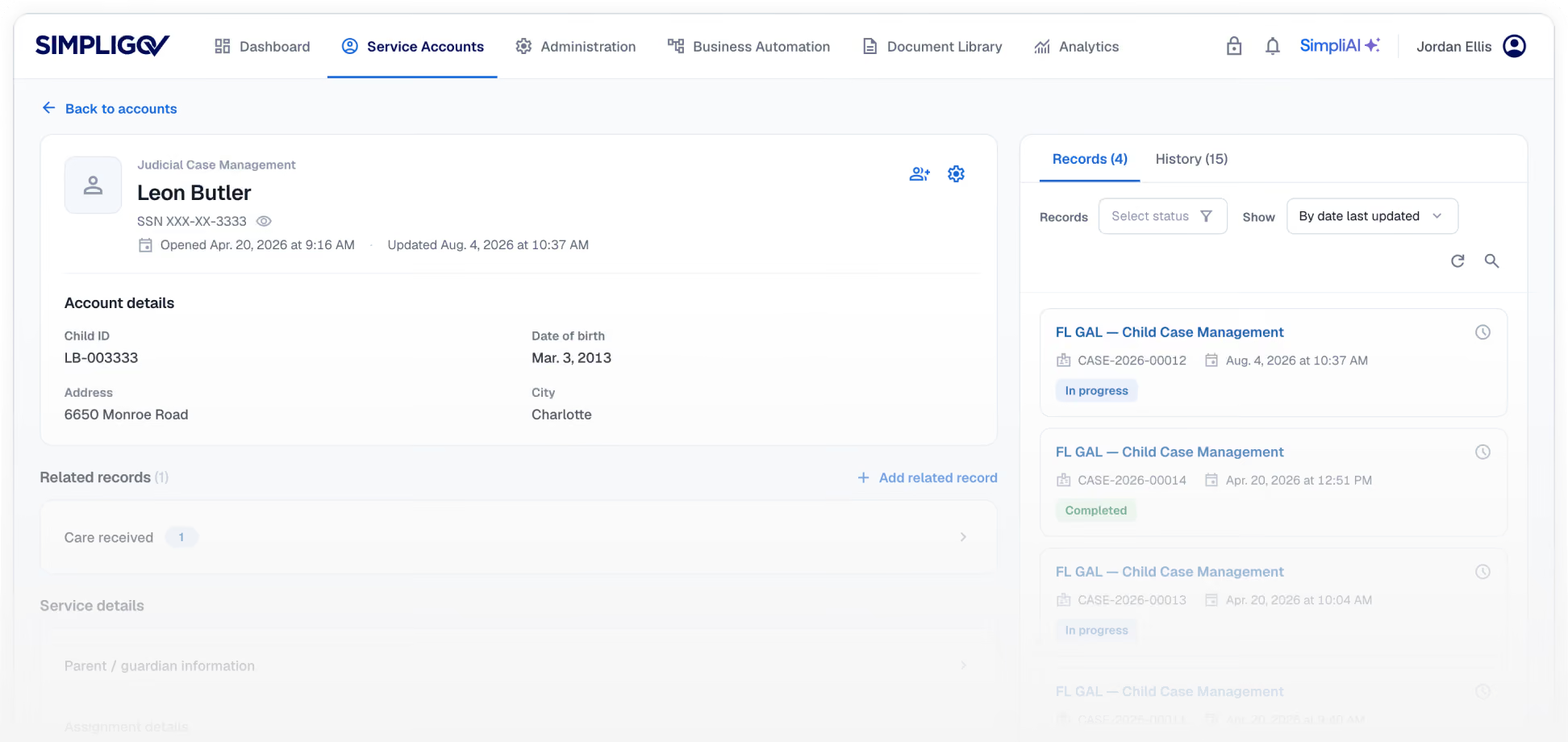


Government Case Management: The Operational Pattern Behind Every Multi-Step Program

A social services case moves from intake to eligibility determination to approval, touching three reviewers and two supervisors over six weeks. A child support enforcement action progresses from application to documentation review to judicial filing, coordinating staff across legal, compliance, and case coordination units. A building permit request enters the system complete but requires sequential sign-off from zoning, engineering, fire, and environmental health before final issuance.

These programs don’t look alike on the surface, but they share the same operational structure: a unit of work that requires multiple people, decisions, and handoffs before completion. That structure is case management. It’s not a software category. It’s the coordination problem at the center of any government program where work moves between people and systems over time.

Case management is how government runs programs where the outcome depends on work you can’t see in any single platform.

Case management is workflow coordination, not a technology layer

Health and human services departments process benefit applications that move from intake staff to eligibility specialists to supervisory review. Social services agencies manage investigations that require coordination between caseworkers, legal staff, and external system checks. Child support services track enforcement actions from filing through documentation to court submission. Every one of these programs is case management.

The work connecting intake to final determination lives in email, spreadsheets, and manual routing rather than in the systems of record that store the outcome. Your case management system may log the final eligibility decision, but it doesn’t run the three-week process of gathering documentation, routing approvals, and coordinating reviews that produced that decision. The work itself is invisible.

When work is invisible, you can’t manage it. You can’t see where cases stall, which approvals are overdue, or why processing times vary by 300% between staff members doing the same job. Case management workflows struggle to meet state-mandated processing timelines consistently because the work connecting each step happens outside the systems designed to track compliance.

Why case management is a coordination problem

Case management programs share three structural characteristics. First, work moves between people who don’t share the same queue, the same system, or the same view of what’s pending. An eligibility specialist completes their review and emails the case to a supervisor. The supervisor prints the file, annotates it, and leaves it in a physical inbox. The next reviewer discovers the case two days later when they check that inbox.

Second, the process depends on decisions that can’t be automated. A caseworker determines whether documentation is sufficient. A supervisor decides whether the case requires legal review. A program director authorizes an exception to standard timelines. These are human judgment calls, and the systems that store the final record weren’t built to coordinate the sequence of judgment calls that led there.

Third, compliance depends on proving the work happened within mandated timelines. State and federal regulators don’t accept “we did the review” as evidence. They require documentation showing when each step occurred, who performed it, and whether processing deadlines were met. Manual workflows make that documentation a reconstruction exercise during audit season rather than an automatic byproduct of daily operations.

Programs where SimpliGov runs case management workflows

Eligibility determination programs process applications for benefits where approval depends on income verification, household composition checks, and supervisory sign-off. Work moves from intake to verification to eligibility specialist to supervisor, with each step documented for state compliance reporting.

Social services quality assurance workflows sample completed cases for review, route them to QA specialists, track corrective actions, and generate compliance reports for state auditors. State mandates in North Carolina and Minnesota require counties to implement structured QA processes, creating demand windows where agencies actively search for platforms that can document review timelines automatically.

Child support services coordinate enforcement actions that require legal review, documentation collection, and case status tracking across multiple staff roles. A case enters as an application, moves through eligibility review and documentation verification, requires legal approval before filing, and generates compliance reporting for federal oversight.

Licensing and registration workflows process applications that require multi-step review, fee collection, background checks, and final approval before issuance. Renewal automation routes expiring licenses to staff for review, collects updated documentation, and issues renewed credentials without manual tracking.

What structured case management workflows enable

When case management workflows are visible and structured, the work that was fragmented across email threads and spreadsheets becomes a documented sequence of steps. Every handoff is automatic. Every decision is logged. Every timeline is tracked without staff manually updating status fields.

Program directors can see exactly where work is stalled. A supervisor opens a dashboard and identifies three cases pending legal review for eight days, two cases waiting on documentation requests from applicants, and one case held for supervisory exception approval. The visibility isn’t a reporting feature added on top of the workflow. It’s the workflow itself made visible.

State auditors require proof that processing timelines were met. An auditable compliance trail documents every review, approval, and timeline automatically, creating the evidence regulators need without reconstructing case histories from email archives and handwritten notes. The platform tracks when each step occurred, who performed it, and whether deadlines were met, because that’s how the workflow runs.

Staff don’t route work manually. A caseworker completes eligibility review and clicks “Submit for Supervisor Approval.” The platform routes the case to the next person in the sequence, sends the notification, and logs the handoff. The caseworker doesn’t look up who the supervisor is, doesn’t compose an email, and doesn’t update a spreadsheet. The work just moves.

Agencies that build structured case management workflows own the process. When a regulation changes and requires an additional documentation step, the program team updates the workflow directly without filing a ticket with IT or waiting for a vendor to configure the change. The people responsible for the program control how the program runs.

The next step

If your department processes work that moves between multiple people and decisions over time, and you can’t see where cases are or prove compliance timelines without reconstructing records manually, you’re running a case management program on infrastructure that wasn’t designed for coordination.

The operational pattern is case management. The question is whether the work itself is structured, visible, and auditable, or whether it’s still happening in the places systems can’t track.

Ready to see it in action? Request a demo.

SimpliGov awards and recognition:

This website uses cookies to ensure you get the best experience possible.