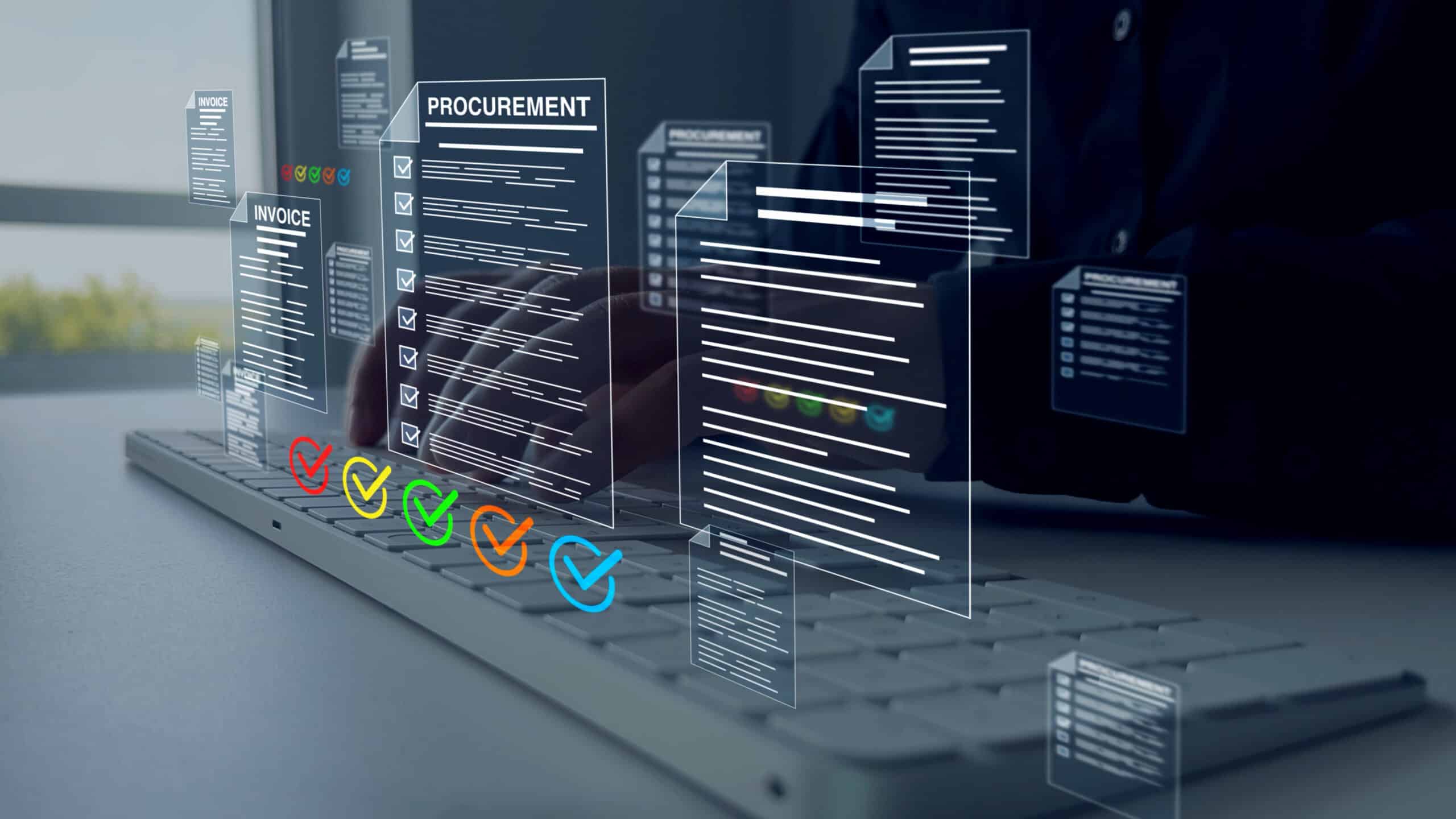
Government procurement doesn’t have to be slow. Despite handling complex compliance requirements, budget constraints, and multi-layered approvals, forward-thinking agencies are dramatically reducing cycle times through procurement process automation without sacrificing oversight or accountability.
Here’s what they’ve learned: The bottleneck isn’t your ERP system. It’s everything that happens before procurement requests ever reach it.
Most procurement delays happen upstream in intake, routing, documentation, and approvals that get buried in inboxes. By fixing the workflow before the ERP, agencies are achieving 30-60% cycle time reductions while improving compliance, vendor relationships, and budget execution.
Why Procurement Delays Are Accelerating
Procurement delays may feel routine, but their consequences are accelerating. Backlogs grow as demand increases. Audit expectations get stricter each year. Vendors lose trust and disengage. Budget execution becomes harder when funding windows shrink and approvals stall.
The reality: Procurement isn’t a back-office function, it’s the engine of government modernization. When procurement stalls, everything stalls: road repairs, technology modernization, public safety equipment, and critical infrastructure projects.
According to Roger Gibson, Director of Government Solutions at SimpliGov and former Division Counsel for New Jersey’s Department of the Treasury, “Procurement can be really hard. The volume of requests is exorbitant, and there’s administrative and legal complexity involved.”
In SimpliGov’s recent “Inside the Workflow” webinar on procurement process automation, Gibson identifies the core issue: “Inconsistency of process was noted as the biggest bottleneck. It’s crucial to have a standardized process to reduce audit risks and errors.”
The Real Problem: Most Bottlenecks Happen Before the ERP
Most procurement delays have nothing to do with purchasing. They happen before purchasing even starts. The real bottlenecks are intake, documentation, approvals, routing, and cross-department coordination.
ERPs are excellent at financial controls and cutting purchase orders. But they weren’t designed to handle intake, validations, routing, risk review, legal steps, or vendor communication.
The bottlenecks that slow procurement:
- Incomplete requests arrive in different formats (emails, PDFs, spreadsheets), often missing key information
- Procurement teams chase departments for missing attachments, coding, or signatures
- Manual routing leads to approvals stuck in inboxes
- Requestors constantly email “Where is my request?” due to no visibility
- Leadership has no visibility into cycle times or bottlenecks
This upstream chaos creates incomplete, inconsistent packages that slow everything downstream, including your ERP.
Standardize Intake to Eliminate Rework
Rework is the silent budget killer. Every incomplete request triggers clarifications, corrections, rerouting, and delays.
Procurement process automation begins with standardized digital intake that collects complete information upfront using conditional logic and mandatory validation.
Essential intake elements:
- What is being purchased (clear description/scope)
- Why it’s needed (business justification)
- When it’s needed (timeline/needed-by date)
- Estimated total value (including renewals, add-ons, installation)
- Procurement motion (goods vs. services vs. contract)
- Department/cost center/project name
- Special funding (grants, dedicated appropriation)
Rule of thumb: If someone could read this and still ask “What exactly are we buying?” or “Why are we buying this?” it’s not ready.
Smart form features include prepopulated known data (requester info, department codes), conditional fields that capture specifics based on request type (software licenses trigger publisher/reseller fields; consultants trigger start/end dates), and data sources that standardize inputs to prevent inconsistent entries.
Complete, accurate submissions move forward automatically, speeding approvals, cutting rework, and keeping critical purchases on schedule.
Automate Routing and Build Real-Time Visibility
Once intake is complete, automated routing ensures requests follow the correct procurement path based on value, risk, and category: simple purchase/P-card, competitive bidding (RFQ/RFP/IFB), contract renewal, sole source/emergency, or cooperative contract.
Threshold-based routing automatically engages the right approvers. Requests under $2,500 might route to a department head, while those exceeding $250,000 trigger finance, legal, and executive reviews.
A simple rule from the SimpliGov Ready ERP-Ready Procurement Intake Checklist: If approval ownership is unclear, the request will stall.
Real-time dashboards provide:
- Where every request sits in the workflow
- How long it’s been at each stage
- Who’s responsible for the next action
- Which requests are urgent or above certain thresholds
“What gets measured gets done,” Gibson emphasizes. By tracking cycle time at each gate, agencies gain predictability and can identify bottlenecks before they compound.
This visibility stops the endless “status-check” emails and gives everyone transparency into the process.
Support Data Refinement Throughout the Process
Unlike traditional forms that lock once submitted, modern workflows allow controlled editing as requests progress. This recognizes that procurement requests are rarely perfect the first time.
When IT reviews a projector request, they can add missing power cords. When the procurement supervisor reviews funding, they can refine budget codes based on institutional knowledge. Teams add quotes and documentation collected during the process.
The system captures every change in the audit trail, ensuring accountability while enabling continuous improvement.
Make Procurement Audit-Ready and Defensible
Manual reviews, inconsistent templates, and scattered documentation lead to errors, policy violations, and audit findings. The biggest threat to procurement isn’t non-compliance, it’s inconsistency.
Standardized workflows capture complete audit trails with timestamps, version control tracking every change, required documentation collected upfront (quotes, scope of work, specs, evaluation criteria, justifications), approval routing accountability, risk and readiness checks (ethics disclosures, legal reviews), and centralized recordkeeping.
When protests or open records requests come, procurement teams can export the complete audit trail and all supporting documents with one click.
Reminder from the checklist: Inconsistency breeds risk, and email is not your friend.
Improve Vendor Relations Through Transparency
Procurement delays harm vendor relationships and shrink the competitive bidding pool. Vendors don’t disengage because of government rules. They disengage because of opacity.
Modern workflows collect vendor information early (suggested vendors, contact info, constraints, onboarding requirements) and provide clear expectations for what to submit and by when.
Quick check from the checklist: Would a vendor know exactly what to submit and by when?
When procurement moves faster and communicates clearly, agencies attract better bids and build vendor trust.
Integrate with Existing Government Systems
Government agencies can’t replace their ERP systems. Modern procurement automation acts as the connective layer, integrating with existing ERP and document management systems.
“We recognize that government isn’t a greenfield,” Gibson notes. “There’s legacy involved. Our platform acts as the glue in the ecosystem, interacting seamlessly with ERP and document management systems.”
The platform auto-generates ERP-ready documentation, supports API connections for direct data flow, and delivers clean, validated, complete data to financial systems. This makes the ERP far more effective by eliminating the manual chaos that happens before data reaches it.
Procurement Connects to Everything
Procurement doesn’t exist in isolation. You don’t fix it with a point solution. You fix it with a platform that supports everything procurement touches: budget and fiscal pre-approval, IT reviews and security checks, legal reviews and contract routing, vendor compliance and onboarding, and contract lifecycle management.
By centralizing connected processes on one platform, agencies eliminate handoff delays and create seamless transitions between stages.
Measurable Results: 30-60% Cycle Time Reduction
Agencies implementing procurement process automation report 30-60% reduction in approval cycle times, near elimination of incomplete submissions requiring rework, significant drop in status-check emails, better vendor participation due to predictable timelines, improved budget accuracy and ERP data quality, and reduced audit risk through consistent, documented processes.
The Path Forward for Government
Modern procurement isn’t about replacing your ERP. It’s about fixing the upstream chaos that happens before anything reaches your system of record.
By standardizing intake, automating routing, refining data as it moves, and delivering clean, complete, ERP-ready packages, government procurement transforms from a bottleneck into a competitive advantage.
Want to reduce cycle time by 30-60%? Request a procurement process automation demo to see where your biggest bottlenecks are and how workflow automation can transform your agency’s procurement operations.