SimpliGov |
October 14, 2026
Built to Run: The Work Behind the Moment
The work behind government services runs on email, spreadsheets, and memory. Here’s what changes when it’s built to run.
SimpliGov |
October 14, 2026
The work behind government services runs on email, spreadsheets, and memory. Here’s what changes when it’s built to run.
In this article
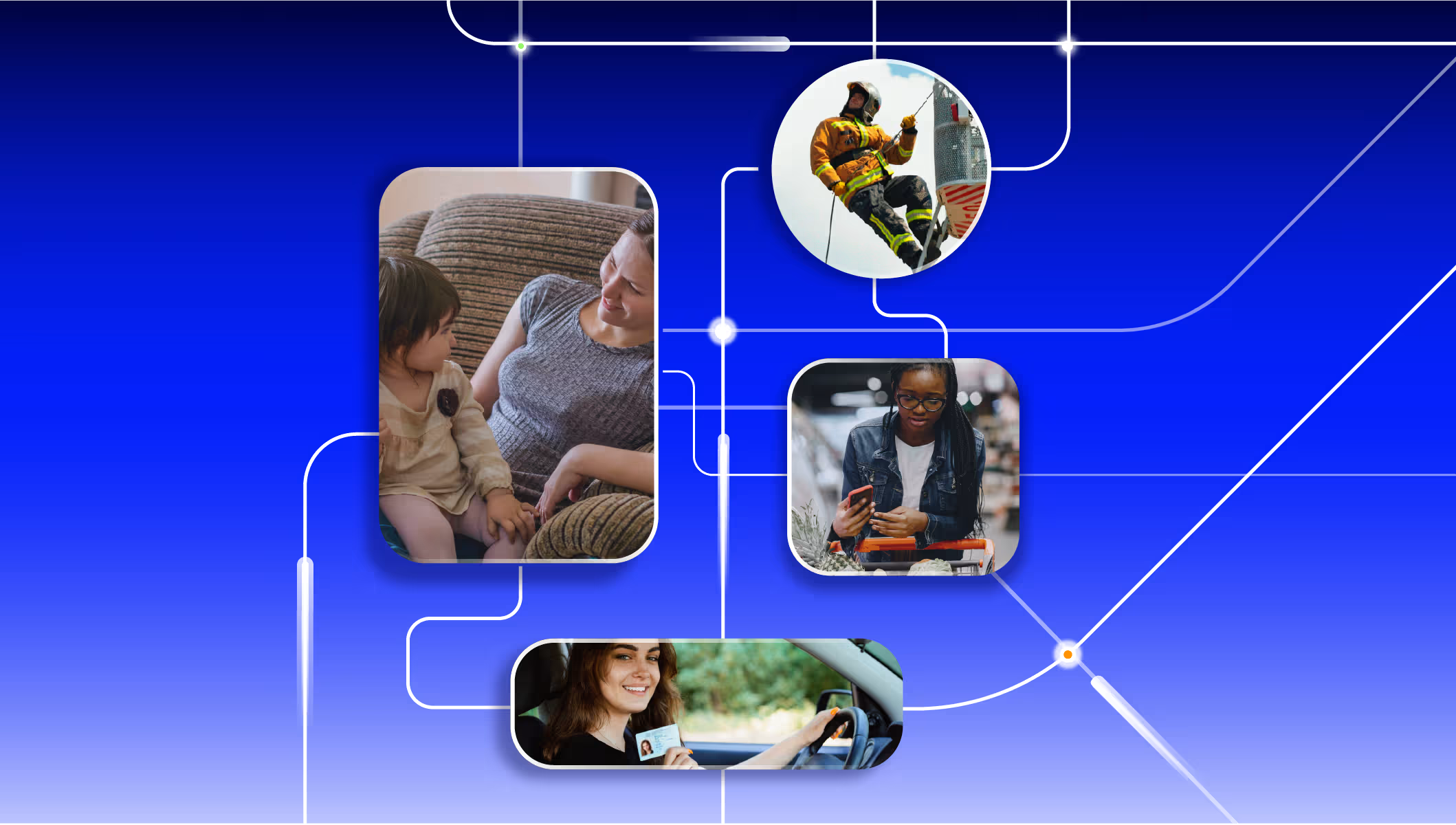
Most people will never see a requisition, a background check, or a routing slip. They see a crew with the equipment it needs, a new employee on their first day, a business owner holding the permit that lets them open. Those are the moments communities remember.
The work behind those moments is just as invisible inside government. It runs on email threads, spreadsheets, and whoever has the file. When the person who knows a process leaves, the process leaves with them. And work no one can see is work no one can improve.
Expectations have moved. The work behind them hasn’t.
The people government serves can apply for a loan from their phone and track a package to their doorstep. They bring those expectations to every government service: a permit, a benefit, a job application, a contract.
Behind the counter, much of that work still runs the way it did decades ago. Requests arrive as PDFs and email attachments. Packets move from desk to desk. Approvals wait on whoever has the file, and no one can say where a request stands without picking up the phone.
The problem isn't the people doing the work. Public servants are carrying more volume, more complexity, and more scrutiny with the same or fewer resources. The problem is that the processes they depend on were never designed to keep up, and the gap between what constituents expect and what those processes can deliver is growing.
Every government service has three parts:
Most conversations about government modernization focus on the first part, the front door. The real difference is made in the second. When that journey is visible, connected, and predictable, the moment takes care of itself. When it isn't, no front door can fix it.
That is the idea behind Built to Run. It's a way of looking at government service from the inside out, starting with the moments communities rely on and revealing the work, and the people, behind them.
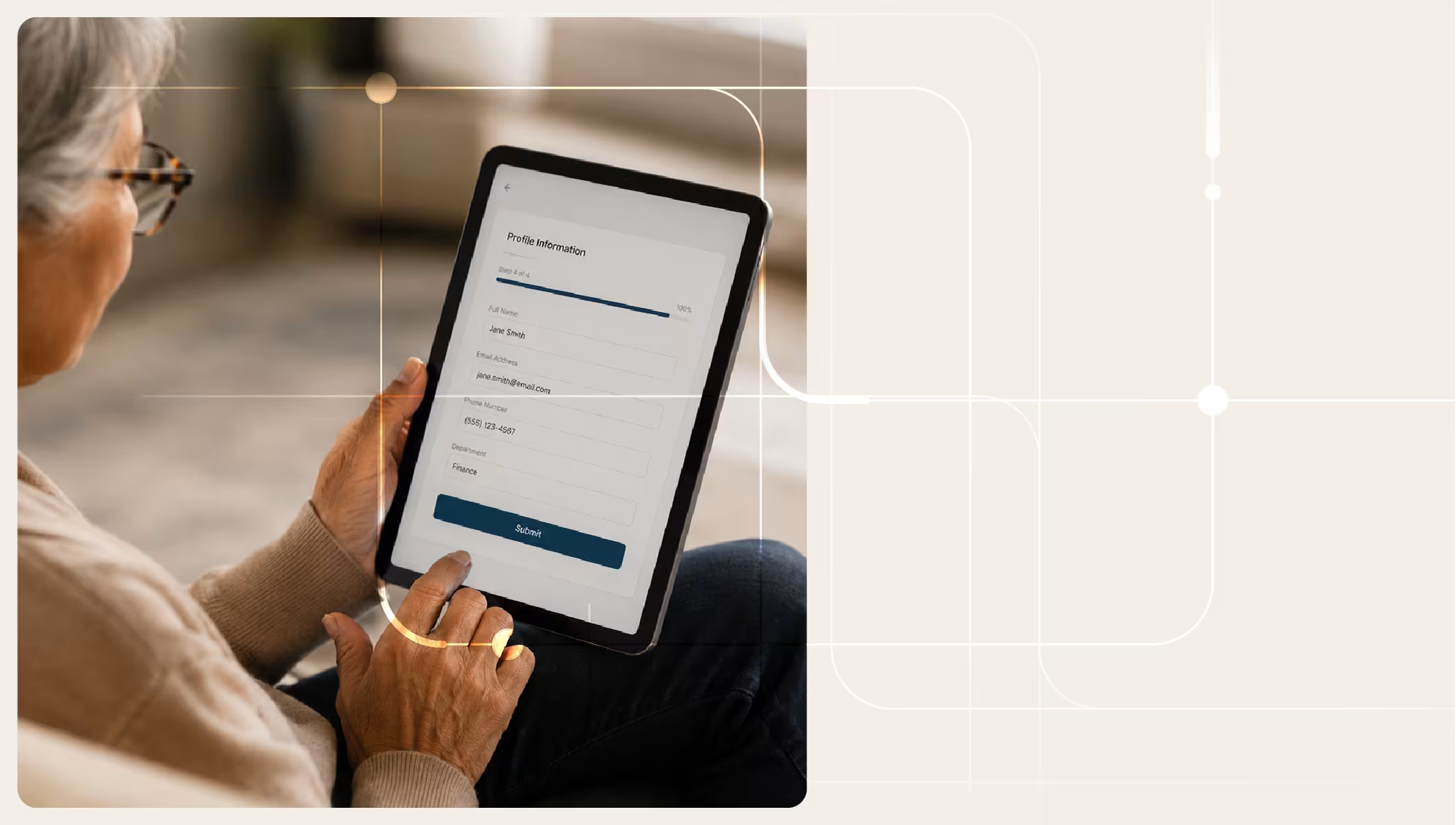
The moment: A new employee walks in with a badge, a desk, and everything they need to start.
The work behind it: Background check cleared → approvals routed through budget, HR, and leadership → IT access provisioned → every acknowledgment signed and filed.
At one of the largest counties in Texas, that work took seven or more business days, split across HR, IT, and department sign-off and coordinated almost entirely by email. After connecting those steps into one workflow, onboarding now takes two business days or less, a reduction of more than 70%.
"With SimpliGov, it is even easier for us to guarantee that anyone joining the agency has everything they need to kickstart their career with us from day one." (Chief HR Officer)
The moment: A contract is approved, and the work it funds can begin.
The work behind it: Document submitted → routed through every required reviewer → executive sign-off → filed for audit.
At the California Department of Child Support Services, executive documents traveled in a physical "Red Folder." Approvals took 60 to 90 days, there was no central way to track where a folder was, and documents were lost along the way. After moving that review into one tracked workflow, approvals now take 10 days, with real-time visibility into every document's status.
"Having a digital tool like SimpliGov that offers ease of use and the transparency of being able to see where the folders are in the review process is extraordinary." (Kimberly Peng, Chief of the Procurement and Contract Branch)
The moment: A carrier gets its permit and gets back on the road.
The work behind it: Application submitted → validated before it reaches staff → reviewed → permit issued.
California's DMV had no digital way for carriers to apply for or renew Motor Carrier Permits. Staff spent about 20 minutes re-entering each paper form, and roughly a third of applications came back incomplete or incorrect. With an end-to-end workflow, one-third of applications are no longer rejected for errors, 20 minutes of manual entry are eliminated per form, and the process was live in eight weeks, for a state of 39 million people.
The moment: A project moves forward, and a neighborhood starts to change.
The work behind it: Application filed → routed to the right planner → reviewed collaboratively → archived and auditable.
LA City Planning required applicants to file development applications on paper and meet with planners in person. Today, applicants no longer need to visit an office to file, routine paperwork is filed automatically, and every case is digitized, archived, and auditable, for a city of 3.8 million.
These four stories cover HR, procurement, transportation, and planning, but the pattern behind them is the same.
That last point matters most. Modernizing the work behind government services is often treated as a multi-year systems overhaul. In practice, the agencies seeing results started with one workflow, made it visible and predictable, and built from there, without replacing the systems they already run on.
Built to Run is how we describe government operations that can keep up: with the volume, with the scrutiny, and with the expectations of the people they serve.
It's also how we describe what SimpliGov does. SimpliGov is the operations platform government runs on. We help agencies design, run, and continuously improve the workflows behind the services communities depend on.
Over the coming months, we'll be telling more of these stories, from hiring and procurement to benefits, permitting, and public safety. Each one starts with a moment people remember, and the work that made it possible.
Every agency has a moment its community relies on. We'd welcome the chance to walk through the work behind yours. Request a Demo.
See how the workflows you're running by hand right now can run themselves.